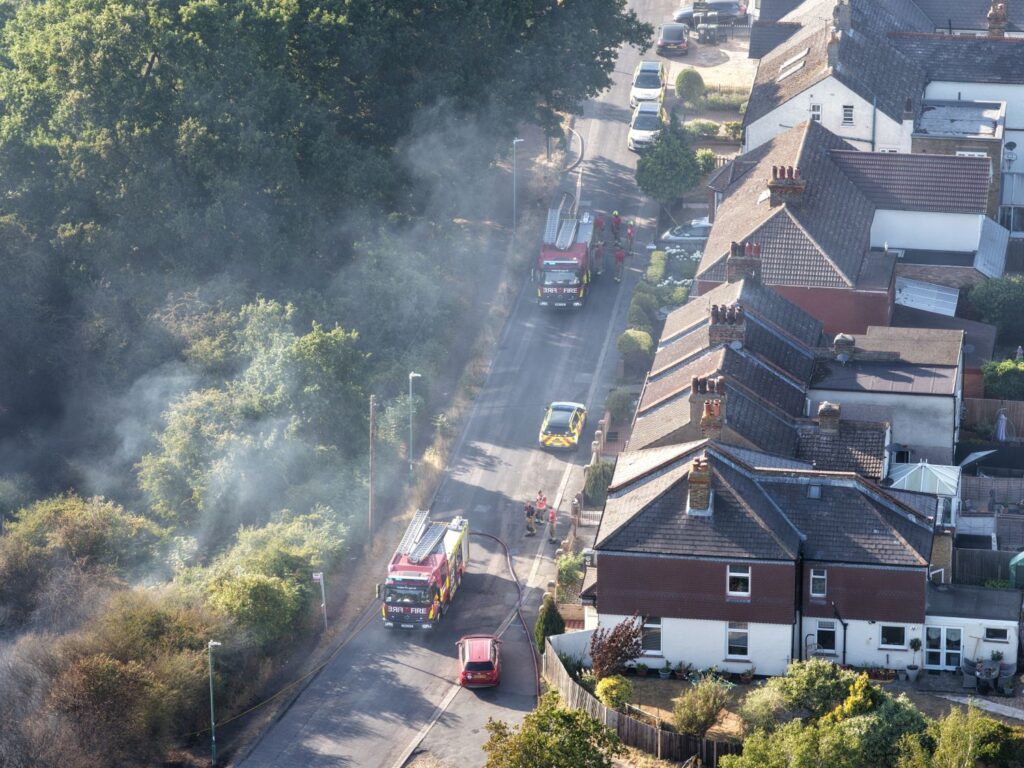
Wildfires are more common in the UK than many people realise, although most are typically small and last a short time. Although most wildfires are started by human actions, drought conditions can dry out vegetation, providing fuel for fires and increase the risk of wildfires. Climate change projections suggest we will see conditions more favourable for larger, more severe wildfires.
In 2025, fire and rescue services in England and Wales responded to nearly 1,000 wildfire incidents - surpassing the previous record set in 2022. This year, widespread wildfires have led to headlines about a ‘firewave’. With hotter, drier summers becoming more common, it’s worth knowing what wildfires mean for your health and what you and others can do to stay safe.
What counts as a wildfire?
A wildfire is any uncontrolled vegetation fire serious enough to require an emergency response. Typically, they include fires covering at least a hectare of land (approximately the size of 2 rugby pitches), with flames over 1.5 metres high, or incidents requiring fire crews for 6 hours or more. Wildfires can burn grassland, moorland, woodland and peat, and they can start and spread remarkably quickly.
Are wildfires really a UK problem?
Increasingly, yes. Climate change is making our summers hotter and drier - ideal conditions for fire. When landscapes experience several consecutive days of dry weather and little or no rain, plants and soils lose moisture faster than they can recover. Vegetation becomes a more available fuel source, making it much easier for fires to spread. In 2025, Scotland experienced the UK's first ever 'mega fire', burning over 10,000 hectares in the Highlands.
It takes very little vegetation (fuel) for a wildfire to start and it is important to follow wildfire prevention advice issued by the Fire and Rescue Service. Most wildfires start due to human activities and are a risk to communities, emergency services as well as increasing pressure on our health service. UKHSA’s Health Effects of Climate Change (HECC) Report includes a chapter on wildfires that provides an overview of the health effects of wildfires in the UK.
Why is wildfire smoke harmful?
All smoke is potentially harmful to your health. Wildfire smoke is made up of various air pollutants which will depend on what is being burnt and the nature of the fire but is likely to contain a complex mixture of fine particles, carbon monoxide, nitrogen oxides and volatile organic compounds. The fine particles are particularly concerning as they can penetrate deep into your lungs and even enter your bloodstream causing illness.
Smoke inhalation can cause irritation to your eyes, nose and throat, coughing, wheezing and breathlessness. For people with asthma, heart disease or other respiratory conditions, the effects can be more serious, potentially triggering hospital admissions. Children, older adults and pregnant women are also at greater risk.
What should I do if there's a wildfire nearby?
If you are in an area affected by a wildfire, it is important you follow the advice from the emergency services and stay safe. Fire can spread rapidly and present a real threat to life and to property.
Residents should avoid areas affected by smoke from a wildfire. Where you have to stay in the area - and there is no risk from spreading fire - the single most effective thing you can do is stay indoors with doors and windows closed. This significantly reduces your exposure to smoke, even in older, draughtier homes. Here are the key steps:
- stay inside and keep windows and doors shut
- turn off any air conditioning systems that draw air in from outside
- avoid or limit any time spent outdoors in areas affected by smoke
- follow local media for updates and follow official advice
Additional actions to consider during hot weather:
- draw curtains and blinds to limit solar heat build-up indoors
- use a fan to keep air circulating inside the room
- stay hydrated with cool drinks
- avoid strenuous activity
- if it becomes hot indoors, move to the coolest part of your home, particularly when sleeping
If you need to drive through a smoky area, keep your vehicle windows up, close air vents, and switch your air conditioning to recirculate mode. Never leave children or pets in a closed vehicle.
Find out more on our blog post about how to stay well in hot weather.
When smoke conditions improve, you may wish to open doors and windows to help cool and ventilate your home. However, conditions can change quickly and smoke may return, so we would advise you continue to monitor official advice and only ventilate properties when it is safe to do so.
What if I experience any health problems?
Wildfire smoke can irritate air passages, skin and eyes, resulting in coughing and wheezing, breathlessness and chest pain. It can also worsen pre-existing lung and heart conditions.
For most people any symptoms will be temporary and will quickly disappear once you are away from the smoke. However, if symptoms persist or get worse, you should seek health advice.
What if I have a condition like asthma?
If you have an asthma action plan or other agreed health management plan, follow it and make sure you have access to any prescribed inhalers or medication. If you don't have one, it's worth speaking to your GP or nurse about putting one in place.
Should I wear a face mask?
Face masks such as surgical masks are not usually recommended as they do not necessarily protect against all the pollutants that may be present in the smoke.
Are there any risks involved in cleaning up after a wildfire?
Short-term contact with ash and soot is unlikely to pose a significant health risk, but it's sensible to take care. Ash can irritate your airways, so avoid sweeping it into the air unnecessarily. It can be safely washed off cars and outdoor furniture with water. In the event of a hosepipe ban, buckets or watering cans can be used.
Where can I find reliable information during a wildfire event?
Keep an eye on advice and guidance from the emergency services, from UKHSA and your local authority. Local news is often the quickest source of specific, location-based advice during an incident.
Can I do anything to help prevent wildfires?
Most UK wildfires are started by human actions whether deliberate or accidental. Fires started by cigarettes, litter, barbecues, campfires and fireworks in very dry areas are entirely preventable. Everyone can play a part in reducing wildfires. Please act responsibly, don’t light fires in the countryside or open spaces, only use barbeques where permitted and dispose of cigarettes and litter safely. More information on being prepared for wildfires can be found on the UK government's Prepare website.
For more information on protecting your health during adverse weather, visit UKHSA's Adverse Weather and Health Plan resources on GOV.UK.