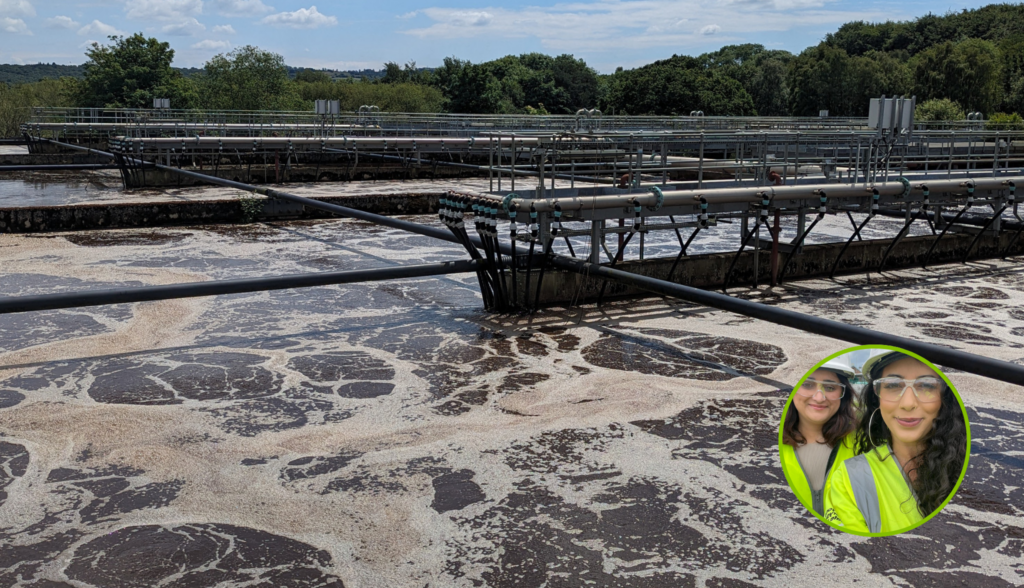
The wastewater that we send from our toilets towards sewage treatment plants every day is potentially rich in data about our health. For the past 4 years, UKHSA has been monitoring wastewater across England for signs of polio, and over the past year has been testing new technologies to detect other potential threats. The next phase of the programme – made possible by a £3 million investment from the UK Integrated Security Fund (ISF) - will expand our capabilities and enable us to publish new data.
What is PRISM, and why does it matter?
Pathogen Risk Intelligence through Surveillance and Modelling (PRISM) is UKHSA's expanding wastewater and environmental surveillance programme, designed to detect a wide range of pathogens that could affect public health.
What makes PRISM different from traditional wastewater surveillance is that it isn't limited to a single pathogen. Instead, one sample of wastewater can be tested for many different threats at once. This gives significantly more value from every sample collected.
What has the programme achieved over the past year?
The team's biggest achievement has been proving this multi-pathogen approach actually works. Before PRISM, wastewater testing in government tended to focus on one target at a time. Now, UKHSA has demonstrated that a single sample can support public health surveillance, biosecurity monitoring and tracking of antimicrobial resistance simultaneously.
This proof of concept has opened doors that were previously closed. UKHSA is now working with government and academic partners to realise the vision of ‘sample once – test many’. Exploring how wastewater surveillance could support their specific needs, from targeted testing to detecting diseases arising from interactions between humans, animals and the environment.
The programme's surveillance network currently covers the wastewater of around 25 million people across England, a scale made possible by building on infrastructure already in place for the UK's polio elimination programme.
What is currently being monitored?
Right now, PRISM is testing for a range of pathogens including norovirus, enterovirus, flu A, flu B, rhinovirus, RSV and COVID-19 identifiers. The current approach detects presence or absence, rather than tracking trends over time. In parallel, PRISM is also taking a less targeted approach that can detect any or all pathogens in a sample without needing to know beforehand what specific organism is present. This is vital if we are to better detect new or unusual pathogens.
One area where PRISM is already delivering practical value is norovirus, the winter vomiting bug. The programme can track norovirus strains circulating across the country, helping build a clearer picture of the pressures facing the NHS each winter.
What's changing in the coming year?
New investment is enabling the programme to build new technology-driven capabilities, allowing for PRISM to unlock more value from wastewater. We are adding new sites, increasing our coverage and improving our ability to detect pathogens that were previously hard to detect. The programme - through new automation technologies - is now better able to scale to demands and make these new approaches more accessible to others. A key outcome for the programme, is bridging the gap between data and action. Using these new technologies, and data analytics, we can now build a system that goes from sample, to data, to insight and action.
Before this data is used more widely, it will be tested and compared against other technologies to check its reliability and accuracy, since different pathogens behave differently in wastewater.
What new pathogens will PRISM look for?
The programme has confirmed a set of new targets to prioritise for the coming year, taking advantage of one of our capabilities, chosen to reflect the range of threats the team wants to be ready for. These include diseases with existing elimination goals, such as mpox and measles, alongside emerging threats like avian influenza, Crimean-Congo haemorrhagic fever, West Nile virus, Lassa fever and Middle East respiratory syndrome coronavirus (MERS-CoV).
The list also includes hepatitis A and hepatitis E, and 2 priorities in the fight against antimicrobial resistance: Candidozyma auris and hypervirulent Klebsiella pneumoniae, both of increasing concern to public health experts worldwide.
These targets have been selected to strengthen preparedness and support earlier detection of potential public health threats, rather than because they are currently widespread in the UK.
Building the capability to detect these targets earlier means the country will be better prepared for emerging threats.
What does the future hold?
Beyond new pathogens, over the coming year PRISM will explore targeted surveillance in new environments such as targeted hospital wastewater sites and high-footfall locations, including transport hubs, alongside exploratory work on air surveillance. This work will help assess where environmental surveillance could add most value.
The team is also exploring how this data could support hospitals directly, potentially helping to spot antimicrobial resistance outbreaks early and easing pressure on NHS beds.
Longer term, the ambition is for PRISM to become a permanent, business-as-usual capability within UKHSA, integrated with existing public health surveillance systems so that findings can directly inform decisions and protect communities across England.