
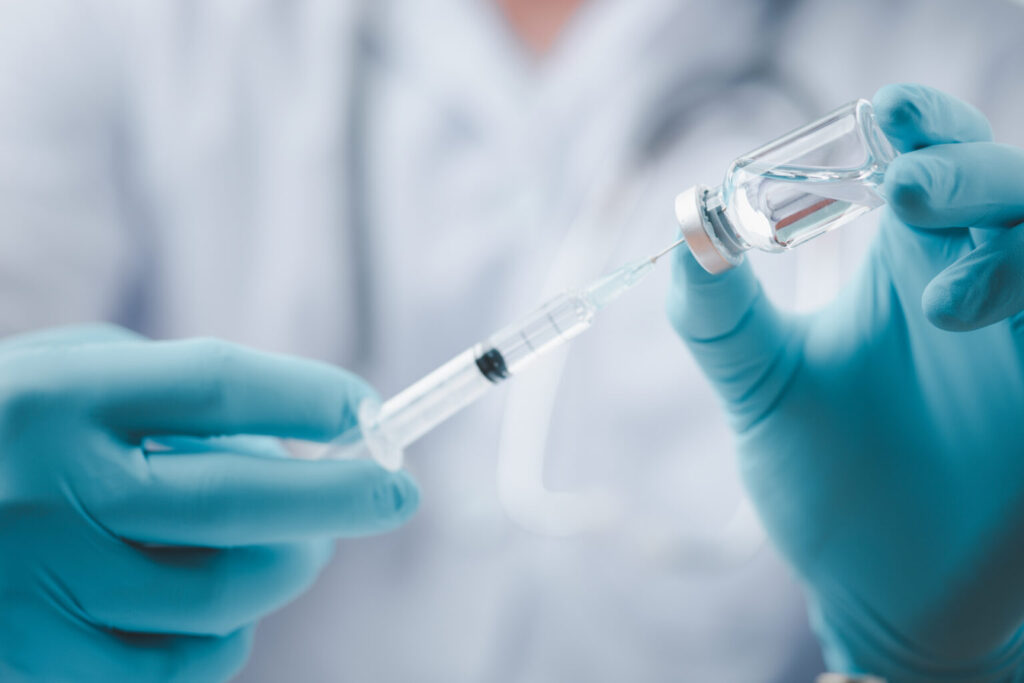
The World Health Organization (WHO) estimates that half of all vaccines produced worldwide never reach the people who need them. The reason? They lose their effectiveness before they can be used.
Most vaccines must be kept cold from the moment they're manufactured until they're administered: a continuous chain of refrigeration known as the 'cold chain'. When that chain is broken, vaccines can lose their effectiveness and may have to be discarded. In remote areas, during natural disasters, or in countries with unreliable electricity supplies, maintaining this cold chain can be extremely difficult.
A vaccine that remains stable at room temperature could be transformative, and UKHSA scientists at our Porton Down laboratories are contributing to a clinical trial that aims to make this a reality.
Testing a room-temperature vaccine
Stablepharma, a UK pharmaceutical company, has developed a tetanus and diphtheria vaccine called SPVX02 that is designed to remain effective without refrigeration. Our Vaccine Development and Evaluation Centre (VDEC) provided specialist laboratory testing for the trial. The vaccine has recently completed first-in-human clinical trials, a critical milestone in the journey towards potential licensing.
Scientists in our Clinical Evaluation Team analysed blood samples from trial participants to measure their antibody responses to the vaccine's key components. This work used testing protocols we have developed and validated at our Porton Down laboratory, and the data we generated will form part of the evidence submitted to the Medicines and Healthcare Products Regulatory Agency (MHRA) as the vaccine progresses towards potential approval.
The trial assessed whether SPVX02 was safe, well-tolerated, and capable of generating immune responses comparable to existing refrigerated vaccines.
Why this matters
Tetanus and diphtheria are preventable diseases, yet they still cause suffering and death in parts of the world where vaccine access is limited. The WHO has identified cold chain failures as a major barrier to global immunisation goals.
A stable, room-temperature vaccine could dramatically reduce wastage, simplify distribution, and make immunisation programmes more resilient, particularly in low- and middle-income countries, and in emergency response situations. This aligns directly with both WHO objectives and UKHSA's commitment to strengthening global health security.
UK expertise supporting global health
By partnering with innovative companies and providing world-class laboratory expertise, we're helping to develop tools that could protect people around the world from vaccine-preventable diseases.
This is just one example of the broader work happening across our Vaccine Development and Evaluation Centre, where our teams evaluated 45 vaccine and therapeutic regimens over the past year alone.
Read the full UKHSA Science Review 2025 on GOV.UK to learn more about our scientific work to protect health in the UK and globally.